

Hey there! As a supplier of Metal Bending Service, I often get asked, "How much does metal bending service cost?" Well, it's not a one - size - fits - all answer, and in this blog, I'll break down the factors that influence the cost and give you a better understanding of what to expect.
Factors Affecting the Cost of Metal Bending Service
1. Material Type
The type of metal you're using plays a huge role in determining the cost. Different metals have different properties, such as hardness, ductility, and thickness. For example, bending stainless steel is generally more expensive than bending mild steel. Stainless steel is harder and more resistant to deformation, which means it requires more force and specialized tools to bend. On the other hand, aluminum is relatively softer and easier to bend, so the cost of bending aluminum is usually lower.
2. Thickness of the Metal
Thicker metals are more difficult to bend than thinner ones. As the thickness of the metal increases, more force is needed to achieve the desired bend. This requires more powerful machinery and potentially more time. For instance, bending a 1 - inch thick steel plate will cost significantly more than bending a 1/8 - inch thick steel sheet. The energy consumption of the bending equipment also increases with the thickness of the metal, which adds to the overall cost.
3. Complexity of the Bend
The complexity of the bend is another key factor. Simple bends, like a 90 - degree bend, are relatively straightforward and less expensive. However, if you need a complex bend with multiple angles or a custom - shaped bend, the cost will go up. Complex bends require more precise programming of the bending machines, and there's a higher risk of errors. For example, creating a Outer Flange with a specific curvature and angle will involve more work and thus cost more.
4. Quantity of Parts
Economies of scale come into play when it comes to metal bending. If you're only bending a single part, the setup cost for the machinery and the labor involved in programming the bend will be a significant portion of the total cost. But if you're ordering a large quantity of parts, the cost per unit will decrease. This is because the setup cost can be spread out over a larger number of parts. For example, if you need 100 pieces of a particular bent metal part, the cost per piece will be lower than if you only need 10 pieces.
5. Tolerance Requirements
Tolerance refers to the allowable deviation from the specified dimensions of the bent part. Higher tolerance requirements mean that the bend needs to be more precise. Achieving a high - precision bend requires more accurate machinery and more careful calibration. For Precision metalworking components, which often have very tight tolerance requirements, the cost will be higher compared to parts with looser tolerances.
Cost Breakdown Examples
Let's take a look at some examples to give you a better idea of how these factors interact to determine the cost.
Example 1: Simple Mild Steel Bend
- Material: Mild steel sheet, 1/4 - inch thick
- Bend: A single 90 - degree bend
- Quantity: 50 pieces
- Tolerance: ± 0.05 inches
For a project like this, the cost will be relatively low. The mild steel is a common and easy - to - work - with material. The simple 90 - degree bend doesn't require complex programming. With a quantity of 50 pieces, the setup cost can be distributed, reducing the per - unit cost. The relatively loose tolerance of ± 0.05 inches also means that less precise machinery is needed. Overall, you might expect to pay around $2 - $5 per piece.
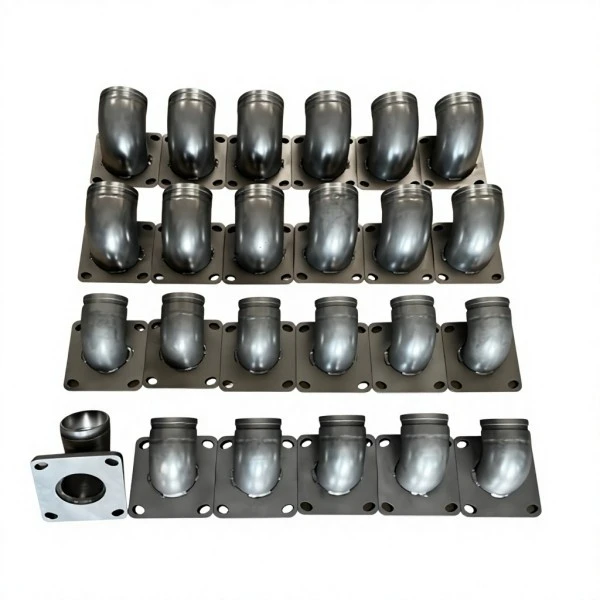

Example 2: Complex Aluminum Bend
- Material: Aluminum alloy, 3/8 - inch thick
- Bend: A custom - shaped bend with multiple angles, similar to an Adaptive Type Ram Air Intake
- Quantity: 10 pieces
- Tolerance: ± 0.01 inches
This project is more expensive. The 3/8 - inch thick aluminum alloy requires more force to bend. The custom - shaped bend with multiple angles is complex and requires precise programming. With only 10 pieces, the setup cost has a larger impact on the per - unit cost. The tight tolerance of ± 0.01 inches means that high - precision machinery must be used. You could expect to pay around $20 - $50 per piece.
Example 3: High - Strength Stainless Steel with Non - standard Design
- Material: High - strength stainless steel, 1/2 - inch thick
- Bend: A non - standard bend, like a Non - standard Cutter Head
- Quantity: 5 pieces
- Tolerance: ± 0.005 inches
This is a high - end project with a high cost. The high - strength stainless steel is hard to bend, and the 1/2 - inch thickness makes it even more challenging. The non - standard design requires custom tooling and programming. With only 5 pieces, the setup cost is significant. The extremely tight tolerance of ± 0.005 inches demands the highest level of precision. You might be looking at a cost of $100 - $500 per piece.
Tips to Reduce the Cost of Metal Bending Service
If you're looking to save some money on your metal bending project, here are a few tips:
1. Choose the Right Material
If possible, select a more cost - effective material that still meets your requirements. For example, if mild steel will work for your application, there's no need to go for the more expensive stainless steel.
2. Simplify the Bend Design
Keep your bend design as simple as possible. Avoid unnecessary complex shapes and multiple angles. Simple bends are quicker and easier to produce, which reduces the cost.
3. Increase the Quantity
If your project allows, order a larger quantity of parts. As mentioned earlier, economies of scale can significantly reduce the per - unit cost.
4. Adjust Tolerance Requirements
If your application can tolerate a slightly looser tolerance, reducing the tolerance requirements can lower the cost. However, make sure it still meets the functional needs of your part.
Conclusion
As you can see, the cost of metal bending service depends on a variety of factors, including material type, thickness, complexity of the bend, quantity of parts, and tolerance requirements. By understanding these factors and following the tips provided, you can make more informed decisions and potentially reduce the cost of your metal bending project.
Whether you're working on a small hobby project or a large - scale industrial application, we're here to provide you with high - quality metal bending services at a competitive price. If you have a project in mind and want to discuss the cost and feasibility, feel free to reach out for a procurement negotiation. We'll work with you to find the best solution for your needs.
References
- Various industry reports on metal fabrication costs
- Internal records and case studies from our metal bending service operations