

If you’ve ever dealt with heavy-duty machinery—think construction equipment, mining conveyors, or industrial centrifuges—you know how frustrating a failed shaft sleeve bushing can be. One minute your production line is running smoothly, the next, a noisy, worn-out bushing brings everything to a halt. As a shaft sleeve bushing supplier, I’ve seen this scenario play out way too many times, and more often than not, the problem boils down to picking the wrong part for the job. Heavy-load applications aren’t like your average home garage projects; they demand precision, durability, and a whole lot of resistance to stress. So today, I’m breaking down exactly how to select the right shaft sleeve bushing for heavy-duty use, no confusing jargon, just real-world tips from someone who’s been in the thick of it (literally, that’s where our manufacturing floor is).
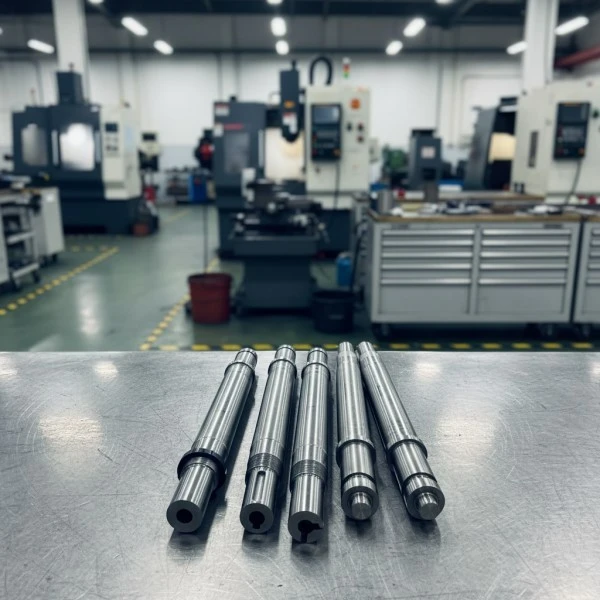

First, let’s talk about what makes a load “heavy” in this context. It’s not just about a ton of weight sitting on a shaft. Heavy loads here include constant radial pressure (like a conveyor carrying 100,000 lbs of material), shock loads (a excavator bucket slamming into rock), high speeds paired with friction, and even extreme temperatures. If your bushing can’t handle that combo, it’s toast in weeks—not months. So step one: map out every single load factor your application faces. Skipping this is like buying winter boots for a trip to the desert—sounds silly, but I’ve seen it happen more than you’d think.
Next up: material selection. This is the big one for heavy loads, and it’s where most people fumble. Not all bushings are made the same. Let’s go over the go-to materials for heavy-duty use, and when to pick each.
First, bronze alloys. Bronze is a workhorse for heavy loads, thanks to its high tensile strength and great wear resistance. But not all bronze is created equal. For example, tin bronze is tough, but aluminum bronze is even harder—perfect for shock loads. Wait, but what about when there’s no lubrication? Oh right, leaded bronze has self-lubricating properties, which is a lifesaver for applications where you can’t grease the bushing often (like parts on a mining truck that’s 1,000 feet underground). Pro tip: if you’re dealing with heavy corrosion too (like in a fertilizer plant), look for bronze with nickel added—it’s way more rust-resistant. We make custom bronze bushings for a lot of construction clients, and they swear by how long ours last even in the harshest job sites. For a peek at the other custom metal parts we fabricate that pair well with bushings, check out our Customized Automotive Components page—wait, no, actually, that’s more for automotive, but if you’re in industrial, stick with bronze for now.
Then there’s cast iron. Gray cast iron is cheaper, but it’s brittle—bad for shock loads. Ductile iron, though? That’s a game-changer for heavy-duty. It’s strong, has some give, and handles high temperatures way better than bronze. We use ductile iron for bushings in parts that work with heat, like the Container Electric Heating Dryer—wait, actually, that’s a dryer, but our ductile iron bushings hold up there because they don’t warp when exposed to consistent heat. Just don’t use cast iron in applications where there’s constant moisture; it’ll rust through fast.
And let’s not forget about polymer bushings, but only if you’re smart about it. Modern polymers like PTFE or UHMWPE can handle some heavy loads, but they’re no match for the brute force of bronze or ductile iron. They work great for lighter heavy loads—like packaging equipment—but if your shaft is moving 50 tons, skip the polymers. I’ve had a client try to switch to polymer bushings to save money on a conveyor, and they failed in 2 weeks. Oops.
Once you’ve nailed down the material, it’s time to get into design specs. This is where things get technical, but I’ll keep it simple. First, the inside and outside diameter. If the bushing is too small, it’ll bind and wear out fast; too big, and there’s play which causes vibration. For heavy loads, you want to make sure the bushing’s length is at least 1.5 times its diameter—this spreads the load out so it doesn’t concentrate on a tiny spot. I learned this the hard way early on: a client had a mining conveyor with short bushings, and every week they had to replace them. We fixed it by extending the bushing length, and it lasted 6 months. Worth the extra material, trust me.
Then there’s the fit between the shaft and the bushing. In heavy loads, a loose fit is a disaster—movement causes friction, which heats up the bushing and the shaft, leading to seizing. But an interference fit (where the bushing is slightly larger than the hole it’s going into) works best. The bushing is pressed into place, so it doesn’t move. For extra heavy loads, some people add a keyway or set screws to keep it from rotating, but be careful—those can create stress points if not done right.
Lubrication is another make-or-break factor. Heavy loads mean more friction, so you can’t skip this. But not all lubrication is the same. If you can access the bushing easily, a grease fitting (zirk fitting) is perfect—you can top up the grease on schedule. If it’s a hard-to-reach part, like the main shaft in a Rock Wool Centrifuge Assembly Main Shaft, you want a self-lubricating bushing (like leaded bronze I mentioned earlier) or a sealed bushing that traps lubricant inside. Sealed bushings are great because they keep dirt and debris out too—another win for dirty job sites. Wait, speaking of debris: if your application has lots of dust or particles (like a quarry), make sure the bushing has good seals. Dirt is the #1 cause of bushing wear, period. It’s like sandpaper inside the bushing, so seals are non-negotiable for heavy-duty outdoor use.
Now, let’s talk about load direction. Is your load only radial (side to side, like a conveyor roller) or is it axial (up and down, like a crane hook) too? If it’s both, you need a bushing that can handle thrust loads—some bronze bushings are made with a flange on one end for this, which spreads the axial force. If you ignore thrust loads, the bushing will push against the housing and crack. We see this a lot on lifting equipment, so always check for axial force when doing your load analysis.
What about temperature extremes? If your machine is in a steel mill where it’s 500 degrees Fahrenheit, your bushing can’t soften or melt. Bronze and ductile iron hold up here, but polymers will turn into a puddle. On the flip side, if you’re working in Alaska where it’s -40 degrees, some materials get brittle—gray cast iron, for example, will shatter. So match the material’s temperature rating to your application’s environment. We tested our aluminum bronze bushings in cold storage last winter, and they worked great without cracking, so that’s a good pick for frigid climates.
Another thing to consider: maintenance. How easy is it to replace the bushing when it does wear out? In a heavy-load machine, downtime costs way more than the part itself. So pick a bushing that’s easy to install and remove—split bushings are perfect here. They split down the middle, so you don’t have to take the whole shaft apart to swap them. I can’t tell you how many clients have saved hours of labor by using split bushings. For parts where you need super high strength (like heavy-duty sprockets), solid bushings work, but keep maintenance in mind if you’re dealing with a machine that runs 24/7. Wait, speaking of sprockets, we also make Heavy Duty Chain Sprocket that pair seamlessly with our bushings, just so you know.
Wait, let’s address a common mistake people make: buying the cheapest bushing they can find. I get it, budgets are tight, but in heavy loads, a cheap bushing will cost you more in downtime and repairs. A good bronze bushing might cost $50, but if it lasts a year, that’s $50 a year. A cheap cast iron one might be $10, but it fails in a month—so $120 a month, way more money. It’s basic math, but people still fall for the “lowest price” trap. Our advice: look at the total cost of ownership, not just the upfront price.
Let’s run through a quick example to make this real. Suppose you’re a mining company needing bushings for a conveyor that carries 80,000 lbs of rock, runs 18 hours a day, has constant dirt, and temperatures ranging from 30 to 100 degrees Fahrenheit. First, load analysis: high radial load, some shock when the rock is dumped, abrasive debris. Material: aluminum bronze (high strength, wear-resistant, good for abrasion). Design: length 1.5x diameter, interference fit, grease fitting for lubrication, and a rubber seal to keep dirt out. Maintenance: solid bushing (since you can access it) with a grease zirk. Pick that, and it’ll last you way longer than a cheap cast iron one.
What if you’re not sure? Don’t guess. A good supplier (that’s us, by the way) can help you figure this out. We’ve been in the metal fabrication game for years, and we’ve worked with all kinds of heavy-load applications—mining, construction, agriculture, industrial machinery. We can take your specs (or even just a photo of your old bushing) and customize a bushing that fits your exact needs, no overkill, no underperformance. For example, if you need a bushing that works with our Inner Flange Nut for your assembly, we can adjust the bushing’s outer diameter to match perfectly.
Wait, one last thing: testing. If you have a really unique heavy-load application, ask your supplier if they can test the bushing. We do in-house load testing all the time—we put bushings under more stress than they’d ever see in real life to make sure they hold up. That way, you don’t have to do trial and error on your job site, which saves you time and money.
So to wrap this up, the steps to pick the right shaft sleeve bushing for heavy load are: 1) Map all load factors (radial, axial, shock, temperature, debris), 2) Choose the right material (bronze for most heavy loads, ductile iron for heat, avoid polymers for extreme heavy loads), 3) Get the design specs right (length, fit, lubrication, seals), 4) Don’t cut corners on maintenance or cheap parts, and 5) Ask your supplier for help if you’re unsure.
At the end of the day, a good bushing is like the unsung hero of heavy machinery—you don’t notice it until it’s gone, but when it’s working, your entire machine runs smoothly. If you’re ready to stop dealing with failed bushings and find a solution that works for your heavy-load application, reach out—we’re here to help you pick, fabricate, and supply the right bushing. No generic parts, no guesswork, just quality that stands up to the load.
References
- Shigley, J. E., & Mischke, C. R. (2001). Standard Handbook of Machine Design (3rd ed.). McGraw-Hill.
- Society of Tribologists and Lubrication Engineers. (2019). Load-Bearing Characteristics of Plain Bearings. STLE Publications.
- ASME B106.1M-1995. (1995). Plain Bearings (Bushings, Rods, and Spacers) – Metric Series. American Society of Mechanical Engineers.
- Kennedy, F. E. (2004). Wear Control Handbook (1st ed.). CRC Press.
- Mining Equipment Manufacturers Association. (2021). Best Practices for Component Selection in Heavy-Duty Mining Machinery. MEMA Technical Report.