

If you’re in the rock wool gypsum equipment space, you already know how critical uptime, safety, and efficiency are for your operation. I’m someone who’s been selling and supporting this gear for over a decade, and one thing that comes up again and again with new (and even veteran) operators is grounding. It’s not the flashiest part of your setup, but skip the grounding rules, and you’re looking at a whole host of headaches—static buildup, electrical fires, damaged components, even safety hazards for your crew. Let’s break down the real grounding requirements you need to follow, tailored specifically to rock wool gypsum systems, plus how our equipment plays into all this.
First, let’s get why grounding matters for this industry specifically. Rock wool production involves molten rock being spun into fibers, which creates a ton of fine particulate dust—gypsum manufacturing has its own share of powdery residue. Both are conductive in their own way, and static electricity is a huge risk here. If static discharges spark in a dust-filled environment, that’s an immediate explosion hazard. Not to mention, ungrounded equipment can throw electrical interference that messes with sensors, conveyor controls, or your centrifuge rollers—stuff you can’t afford when you’re running 24/7.
Let’s start with the basics: what even counts as proper grounding for this equipment, and where do you need it? First, every single piece of your rock wool gypsum equipment needs a dedicated ground connection, not just a daisy-chain from one unit to another. I’ve seen folks try to string a single ground wire between a screw conveyor and a roller mill, and that’s a mistake. Each machine has its own electrical panel, so each needs its own direct path to a ground rod or building’s main grounding bus.
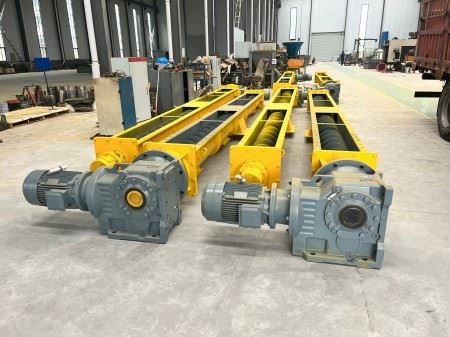
Wait, let’s talk about those conveyor systems first—screw conveyors are the workhorses for moving rock wool fibers, gypsum powder, and raw materials around your plant. A lot of newer operators overlook that screw conveyors can build up static just from moving fine materials through the housing. If your conveyor isn’t grounded, that static can arc to adjacent equipment. That’s why the Highly Sealed Positive-pressure Screw Conveyor we supply has a built-in grounding lug right on the drive housing—no extra parts needed, just connect that lug to your plant’s ground bus. The seal is extra tight, so less dust gets out, and the integrated ground means you don’t have to fumble with adding a separate connection later. We’ve had clients tell us that’s cut their static-related shutdowns by 70% on their mixing lines.
Next, the heavy-duty rollers—because rollers are central to rock wool processing. You’ve got different types: gravel rollers for prepping raw material, centrifuge rollers for spinning rock wool into fibers, even rotary tiller blade rollers that help blend gypsum mixes. Let’s break each down. The Long-lasting, Durable Gravel Roller we supply is made with a conductive metal core, but we still recommend a secondary ground connection to the roller’s shaft. Why? Even a conductive roller can develop a static charge from high-speed rotation when moving abrasive gravel. If the charge builds up, it can damage the bearings or create a spark. We’ve also paired gravel rollers with our Rock Wool Four-roll Centrifuge Roller—those centrifuge units spin at thousands of RPM to turn molten rock into fibers, so any static here is amplified. The Rock Wool Centrifuge Spinning Roller is precision-machined to maintain consistent speed, but without proper grounding, the static from the fiber spinning can mess with the centrifuge’s balance, leading to uneven fiber output and more wear on parts. That rotary tiller blade roller? It’s for blending gypsum and rock wool, so it’s handling fine, powdery materials—same rule: dedicated ground to the shaft, not just the motor.
Now, let’s get into the technical stuff that’s easy to skip: the grounding system itself can’t be flimsy. A lot of plants use old, corroded ground rods, or wire that’s too thin. For rock wool gypsum equipment, your ground wire should be at least 6 AWG copper—bigger than what you’d use for a regular outlet, because these machines draw more power, and static needs a clear, low-resistance path to dissipate. Also, no sharp bends in the ground wire—sharp bends can weaken the wire, creating resistance, which means the static doesn’t drain properly. We’ve had customers come to us with grounding issues where they used 10 AWG wire for their screw conveyors; we recommend upgrading to 6 AWG, and adding a corrosion-resistant grounding clamp (since dust and moisture in the plant can eat away at clamps over time).

Another point: isolation from other systems. A lot of rock wool gypsum plants have separate electrical systems for production and office spaces, but sometimes those are tied improperly, which can cause electrical backflow that messes with your equipment’s grounding. Our team often does site checks for new clients, and we’ll point out if their main ground bus is too far from the production floor—we’ve seen cases where a 50-foot wire from the bus to the centrifuge roller caused so much resistance, the static would build up enough to trip the plant’s safety interlocks. Pro tip: keep ground connections within 25 feet of the equipment if possible, and use insulated ground wire that’s rated for industrial environments (not the thin stuff you buy at a hardware store for home projects).
Wait, what about equipment that’s mobile? No, most rock wool gypsum lines are stationary, but sometimes repair teams move parts around the plant. If you’re working on a conveyor or roller, make sure any temporary ground clamps are metal, not plastic—plastic clamps can’t dissipate static, so you’ll still get a charge on the part. I’ve seen a guy get a shock while swapping a tiller blade because he used a plastic clamp for the temporary ground—never again, right? Always use all-metal, corrosion-resistant clamps for temporary and permanent connections.
Now, let’s talk about testing your grounding—because even if you wired it once, it can fail over time. Dust buildup on grounding lugs can insulate the connection, so the wire isn’t actually touching the equipment. You should test your grounding quarterly, not annually. What do you test for? Ground resistance—ideally, it should be less than 1 ohm for all production equipment. If it’s higher than 5 ohms, that’s a problem, and you need to clean the lugs, tighten the clamps, or even add an extra ground rod. For our equipment, we provide a quick guide to test grounding resistance, and our service team will come out for a site test if you’re not sure. We had a client last year who thought their centrifuge was faulty, but it turned out the grounding lug was covered in rock dust, so the static was making the roller spin unevenly. After cleaning and re-tightening, their centrifuge ran 20% more efficiently, and they didn’t have to spend $10k on a new roller.
Also, don’t forget about safety disconnects. Your equipment’s grounding should work with your emergency stop system, not against it. If a machine trips, the ground path should still be intact to dissipate any leftover charge, so no sparks when you open the access panel. All our rock wool gypsum equipment—from the screw conveyors to the four-roll centrifuge rollers—comes with a pre-wired grounding lug that connects directly to the emergency disconnect, so you don’t have to modify the wiring yourself. That’s a big win for plant managers who don’t want to hire an electrician for every small tweak.
Let’s wrap this up with a quick checklist you can use right now: 1) Every piece of equipment has its own 6 AWG copper ground wire directly to the main ground bus. 2) All grounding lugs are free of dust and corrosion, clamped tight with metal clamps. 3) Test ground resistance quarterly, keep it below 1 ohm. 4) Temporary ground connections (for repairs) are all-metal, no plastic parts. 5) Conveyors and rollers have integrated grounding where possible, like our Highly Sealed Positive-pressure Screw Conveyor and Long-lasting, Durable Gravel Roller.
At the end of the day, proper grounding isn’t just a box to check for compliance—it’s a way to keep your plant running, keep your crew safe, and extend the life of your rock wool gypsum equipment. If you’re still unsure about your current setup, or you’re looking to upgrade your gear with ground-friendly components, feel free to reach out. We’re not just equipment suppliers—we’ve worked with hundreds of rock wool and gypsum plants, so we can help you audit your current grounding and pick the right parts for your line. Don’t let a preventable grounding issue shut down your production—let’s talk through what you need.
References:
- Occupational Safety and Health Administration (OSHA). (2022). Electrical Grounding Requirements for Industrial Machinery. U.S. Department of Labor.
- National Fire Protection Association (NFPA). (2021). NFPA 70: National Electrical Code (Chapter 250: Grounding and Bonding). National Fire Protection Association.
- Institute of Electrical and Electronics Engineers (IEEE). (2020). IEEE 142: Recommended Practice for Grounding of Industrial and Commercial Power Systems. Institute of Electrical and Electronics Engineers.
- Rockwool International A/S. (2023). Safety Guidelines for Rock Wool Production Equipment. Rockwool International.
- Gypsum Association. (2022). Industrial Equipment Safety and Grounding Standards for Gypsum Manufacturing. Gypsum Association.