

When you work in the factory automation space, every piece of equipment in a production line has to play nice with the ones around it—there’s no room for signal interference, unexpected shutdowns, or safety hazards that pop up because two machines can’t communicate properly. As a supplier of winding devices, I’ve spent years talking to manufacturers who’ve run into costly problems related to this: a winding line that throws off a motor’s control signal, a feeder that glitches when the winding device kicks into high gear, or a sensor that misreads because electromagnetic signals are crossing wires they shouldn’t. This is where electromagnetic compatibility (EMC) comes in, and for winding equipment, it’s not just a box to check during design—it’s the backbone of reliable, long-term production.
Let’s break this down simply, because EMC is often talked about in technical jargon that makes it feel out of reach for production managers and engineers who just want their lines to run smoothly. At its core, EMC is about two things: a device’s ability to not emit electromagnetic (EM) energy that disrupts other nearby equipment, and its ability to not be affected by EM energy coming from outside sources. For a winding device, this means balancing the power needed to wind tightly, evenly, and at speed without interfering with the motors, sensors, or control systems in adjacent machines—like the feeders that bring raw material to the winding station, or the mixers that prepare viscous pastes that get wound into finished products.
First, let’s talk about why winding devices are particularly high-stakes when it comes to EMC. Winding work relies on a lot of moving parts: servo motors that adjust tension, encoder sensors that track winding speed and layer count, frequency drives that control motor power, and sometimes even high-voltage systems for specialized applications. All of these components emit EM signals as they operate—from the low-frequency signals in control wires to the higher-frequency pulses in servo motor cables. If these signals aren’t contained or shielded, they can bleed into nearby equipment. I’ve heard from one automotive parts manufacturer that used a cheap, unshielded winding device for their cable harness line: the interference was so bad that their adjacent feeder would mis-feed wire 15% of the time, causing 2-hour unplanned stops every week. That’s exactly the kind of downtime EMC is designed to prevent.
Take the equipment we design and supply at our company, for example. When we build winding devices, we don’t just focus on winding tightness or speed—we integrate EMC measures into every stage, from component selection to final testing. Let’s look at our High-efficiency Automatic Winding Device, which is used in everything from battery component manufacturing to textile production. One of the key EMC features here is the shielded cable harness that runs between the servo motors, control panel, and encoder. We use twisted-pair wiring for all sensor signals, which reduces the amount of EM energy emitted and makes the device less susceptible to outside interference. We also specify EMI filters for all power inputs, which block stray signals from the grid from getting into the device’s internal controls, and stop the device’s own signals from going back into the main power line and disrupting other factory equipment.
It’s not just about keeping other machines happy, either. A winding device that’s not EMC-compliant can damage itself over time. For example, if a winding device’s encoder is disrupted by a nearby EM signal, it might misread the number of layers being wound, leading to defects in the final product. That’s a big deal for applications like medical tubing or lithium-ion battery electrodes, where layer count and winding precision are non-negotiable. Our Tension-adjustable Winding Device is designed with this in mind: the tension sensors that control winding pressure are housed in metal enclosures that act as Faraday cages, blocking outside EM signals that could cause over-tensioning or loose winding. During testing, we’ve run this device side-by-side with other factory equipment, and we’ve never recorded a signal disruption that affected its own performance or the performance of adjacent machines.
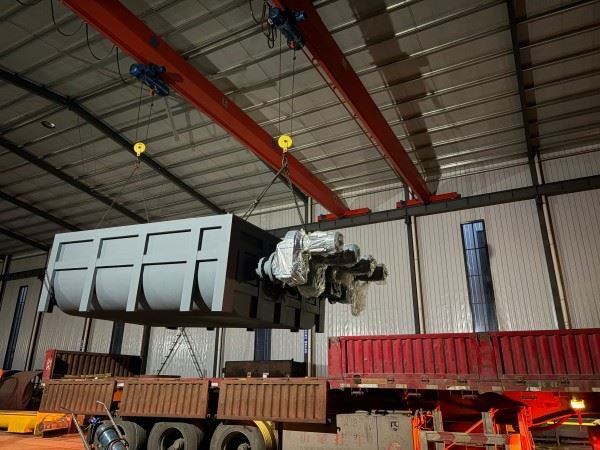

Let’s tie this to other parts of the production line, because EMC in winding devices is part of a larger system. Most winding operations aren’t standalone—they’re paired with feeders that deliver raw material, mixers that prepare the material, and cutting devices that finish the wound product. For example, our Multi-layer Winding Device, used for producing flexible packaging films, works hand-in-hand with a High-efficiency double-helical feeder that delivers the film stock at a consistent rate. If the winding device emitted too much EM noise, the feeder’s speed sensor would get disrupted, leading to uneven film being wound. By designing the winding device with matched EMC levels for upstream and downstream equipment, we ensure the entire line syncs up perfectly. The same goes for applications that use high-viscosity pastes—our Continuous Mixer For High-Viscosity Pastes, used in the adhesive and sealant industry, feeds into winding lines, so the winding device’s EMC has to align with the mixer’s control signals too.
Common EMC challenges for winding device users usually come from two places: either the device itself is not properly shielded, or the factory environment has existing EM noise that the winding device can’t handle. For new factories, this is something to plan for during layout, but for existing lines, retrofitting EMC measures can be a game-changer. I recently worked with a coil manufacturing plant that had an old winding device causing interference with their PLC control system, leading to random line stops. We retrofitted their line with a new EMC-shielded winding device (along with the proper filters and shielding for their feeder and mixer) and cut unplanned stops by 90% in the first month. That’s the real value of EMC—it’s not a fancy technical add-on, it’s a way to protect your production schedule and product quality.
Testing is another critical part of EMC for winding devices. Before any of our products leave our facility, we run them through standard EMC tests, like those set by IEC (International Electrotechnical Commission), to make sure they meet global safety and compatibility standards. These tests include things like radiated emissions testing, where we measure how much EM energy the device emits into the air, and conducted emissions testing, where we check how much noise it puts back into the power grid. We also run immunity tests: we expose the winding device to known levels of outside EM noise (like what it would encounter in a factory with multiple motors and control systems) and make sure it still operates without any glitches. This level of testing is non-negotiable for us, because we know that our clients’ production lines depend on our equipment working around the clock, without hiccups.
For manufacturers evaluating new winding devices, here are a few things to look for to make sure you’re getting EMC-compliant equipment: first, ask if the device has been tested to international EMC standards, not just internal testing. Second, check for features like shielded cables, EMI filters, and metal enclosures for sensitive components like encoders and sensors. Third, make sure the device is designed to integrate with your existing line equipment—whether that’s a feeder, mixer, or other automation tools, their EMC levels should be matched so there’s no signal conflict. Fourth, work with a supplier who understands EMC in the context of winding operations, not just general industrial equipment. At our company, we’ve spent years refining our winding devices with EMC in mind, and our engineers work closely with clients to make sure the equipment fits their specific line needs.
I’ll be honest—when I first got into this industry, I thought EMC was just a technical detail that engineers worried about in a lab. But over the past 15 years working with winding devices, I’ve seen first-hand how a small EMC issue can turn into a major problem: lost production time, defective products, missed delivery deadlines, and added costs for repairs or downtime. That’s why EMC isn’t just part of what we do—it’s a core part of every winding device we design, build, and supply. Whether you’re winding battery electrodes, medical tubing, packaging film, or industrial coils, a winding device with strong EMC means a smoother, more reliable production line, and that’s what every manufacturer wants.
If you’re in the market for a new winding device, or you’re looking to troubleshoot EMC issues in your current line, we’re here to help. Our team has deep experience in designing EMC-compliant winding equipment, from high-efficiency automatic models to tension-adjustable units tailored to your specific application. We can walk you through our products, like our Multi-layer Winding Device for precise multi-layer applications, or our High-efficiency double-helical feeders that work seamlessly with our winding lines, to make sure your entire production system works together without interference. Reach out to our team to discuss your needs and find the right winding solution for your operation.
References
- International Electrotechnical Commission. (2020). IEC 61800-3: Adjustable speed electrical power drive systems - Part 3: EMC requirements and specific test methods. Geneva, Switzerland: IEC.
- American National Standards Institute. (2019). ANSI C63.4: American National Standard for Methods of Measurement of Radio-Noise Emissions from Low-Voltage Electrical and Electronic Equipment in the Range of 9 kHz to 40 GHz. New York, NY: ANSI.
- Electromagnetic Compatibility Association. (2021). EMC for Industrial Automation: A Practical Guide for Factory Designers and Equipment Suppliers. Berlin, Germany: ECA Press.
- Winding Technology Journal. (2022). "EMC Considerations for High-Speed Winding Devices in Battery Manufacturing." Vol. 18, No. 2, pp. 45-52.
- Allen-Bradley Factory Automation Documentation. (2023). Integration Guide for Winding, Feeding, and Mixing Equipment in Continuous Production Lines. Milwaukee, WI: Rockwell Automation.