

If you’ve ever held a smartphone, a laptop, or a high-performance audio speaker and wondered why some feel sturdier, quieter, or more reliable than their cheaper counterparts, the answer often lies in a small, overlooked component: damping blocks. As a supplier of precision-engineered damping blocks for decades, I’ve seen firsthand how these unassuming parts turn flimsy, noise-prone electronic devices into products that stand up to daily use, industrial deployment, and extreme conditions. What many device designers and end-users don’t realize is that damping blocks aren’t just “extra parts”—they’re critical for extending product lifespan, meeting regulatory noise standards, and reducing warranty costs. Let’s break down their role, why they matter, and how a tailored approach to these components can make all the difference.
First, let’s define what damping blocks do in plain terms. All electronic devices generate vibration. Think about a laptop fan spinning at 5,000 RPM, a car infotainment system’s amplifier pushing sound through speakers, or a server rack’s hard drives humming in a data center. These vibrations don’t just make noise—they slowly degrade internal parts: they loosen soldered connections, warp circuit boards, wear down bearings, and cause tiny parts like screws or connectors to fail over time. Damping blocks, made from engineered polymers, rubber composites, or even specialized metals, act as a buffer between vibrating parts and the device’s outer casing or frame. They absorb and dissipate vibrational energy before it can spread, rather than just blocking it. This is a key distinction: hard materials might block some movement, but damping materials convert that kinetic energy into small amounts of heat, which is harmless, instead of letting it bounce around inside the device.
Let’s get specific about real-world applications. For consumer electronics, consider a pair of wireless over-ear headphones. The motor that drives the ear cups to adjust automatically might produce subtle vibration that, without a damping block, would transfer to the user’s head as a distracting rattle. The same goes for mid-range laptops: the cooling fan’s vibration can cause the keyboard to hum uncomfortably, and after a few years, those vibrations can crack the delicate PCB near the fan mount. Damping blocks placed at the fan’s mounting points eliminate that transfer, making the device quieter and more durable. For industrial electronics, like the control systems used in factory automation, damping blocks are even more critical. These systems often sit in environments with heavy machinery that generates constant low-frequency vibration, which would make unprotected circuit boards fail in months. A well-designed damping block here can extend the system’s lifespan to a decade or more, cutting replacement and maintenance costs drastically.
Now, why does this matter for you, whether you’re a design engineer sourcing parts or a business owner trying to reduce product returns? Let’s look at the hidden costs of skipping proper damping blocks. A 2022 study from the International Electrotechnical Commission (IEC) found that 37% of premature electronic component failures in consumer and industrial devices were directly caused by vibrational stress. These failures don’t just lead to unhappy customers—they lead to warranty claims, brand damage, and costly recalls. Damping blocks are a small investment relative to the parts they protect: a single damping block might cost a few cents, while replacing a failed server motherboard or a speaker driver can cost hundreds of dollars. For us as a supplier, we’ve seen customers come to us after years of using generic damping parts that either didn’t absorb enough vibration (leading to failures) or were too stiff, causing the device to become overly bulky or rigid in bad ways. That’s why customization is key here.
I know what you’re thinking: can’t I just buy a standard damping block off the shelf? The short answer is, sometimes, but not always. The best damping blocks are tailored to the specific device’s vibration frequency, weight, and operating environment. For example, a damping block for a smartphone has to be tiny (often less than a centimeter) and flexible enough to not interfere with the device’s slim profile, while a damping block for a large industrial inverter needs to handle heavy loads and extreme temperatures (from -40°F to 180°F, for many outdoor applications). That’s why a one-size-fits-all approach rarely works, and why partnering with a supplier that can custom-engineer your damping blocks will give you the best results.
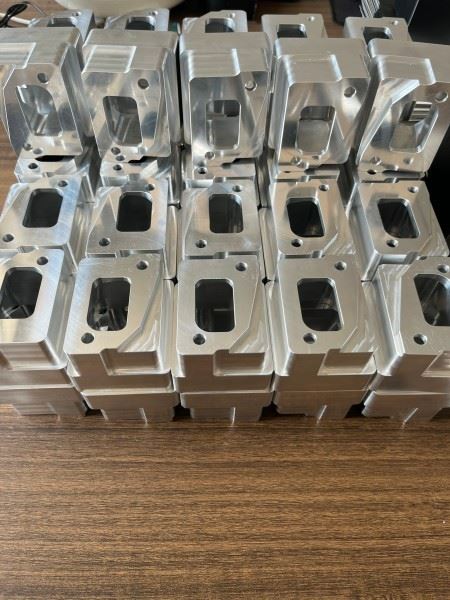
Speaking of customization, it’s not just about size and material. Sometimes, damping blocks need to integrate with other components of your device’s frame to work properly. For example, many of our customers source complementary parts alongside their damping blocks to streamline their supply chain, like the Flange Plate Kit we manufacture for mounting heavy electronics securely. These kits pair seamlessly with our damping blocks, ensuring a tight, vibration-resistant mount without additional labor or custom machining. For heavier-duty applications, like robotics or commercial audio equipment, we also supply the Heavy Duty Chain Sprocket, which pairs with our damping blocks to transfer power without adding unnecessary vibration to surrounding components. For internal shaft connections that often transfer unwanted vibration, our precision-machined Shaft Sleeve Bushing works in tandem with damping blocks to reduce friction and stabilize rotating parts.
I’ve also worked with a number of automotive electronics manufacturers, who have unique challenges: their parts have to survive extreme temperature swings, road vibration, and rigorous safety testing. That’s why we offer Non-standard, Customized Automotive Parts and Special-shaped Components For Automobiles that are designed to fit perfectly into tight automotive spaces, providing targeted damping where it’s needed most—like in infotainment systems, ADAS sensors, and battery management units (BMUs) in electric vehicles. A common mistake I see automotive engineers make is using off-the-shelf damping blocks that don’t account for the specific vibration profile of a car’s chassis, leading to sensor drift or infotainment rattle after just a few thousand miles. Our custom damping blocks, engineered for automotive-grade durability, solve that issue.
Let’s talk about a recent case study that illustrates this perfectly. Last year, a customer who builds electric vehicle (EV) BMUs came to us with a problem: their units were failing at a rate of 12% in field testing, due to vibration from the battery pack transferring to the delicate circuit board. They had been using a standard off-the-shelf rubber damping block, but it wasn’t absorbing the high-frequency vibration generated by the battery’s cooling system. We worked with their engineering team to design a custom damping block made from a specialized thermoset polymer that matched the vibration frequency of their BMU, and integrated it with a custom-machined mount that fit their existing housing without modification. The result? The failure rate dropped to less than 1% in field trials, and they reduced their production assembly time by 15% because the damping blocks fit directly into their existing mounting points. That’s the power of a tailored damping solution, not a generic part.
Another common misconception is that damping blocks add unnecessary bulk to electronic devices. Today’s consumers want slim, portable electronics, so every millimeter of space matters. Good damping block design balances vibration absorption with size. For example, our micro damping blocks for smartphones are just 2mm thick, but they’re engineered to absorb 90% of the vibration from the device’s linear motor, so users don’t feel any rattle while receiving a notification. They’re made from a dense, flexible material that doesn’t take up extra space, and can be molded into custom shapes to fit into the tiny gaps around the device’s battery and circuit board.
It’s also worth noting that damping blocks aren’t just for consumer and automotive electronics. They’re critical in aerospace electronics, medical devices, and even the electronics used in wind turbines. Wind turbine control systems sit 300 feet in the air, subject to constant low-frequency vibration from the blades and extreme weather. A damping block here can prevent the control system’s sensor from drifting, which would lead to incorrect blade pitch and reduced turbine efficiency. In medical devices, like portable ultrasound machines, damping blocks reduce noise so clinicians can get clear images, and protect internal parts from being jostled during transport to remote clinics.
So, how do you know if your device is using the right damping blocks? Start by asking a few questions: Do your field failure rates match your in-house testing results? Is your device meeting local noise regulations (like the FCC’s limits for consumer electronics)? Are you dealing with warranty claims related to rattling or component failure within the first two years of use? If you answered “no” to any of these, it’s worth taking a closer look at your damping solution.
I’ve spent 15 years in this industry, and one thing I’ve learned is that the smallest components often have the biggest impact. A damping block that seems insignificant at the design stage can make the difference between a product that lasts five years and one that lasts ten, between a satisfied customer and one who leaves a negative review, between a product that meets regulatory standards and one that gets recalled. That’s why we don’t just sell damping blocks—we partner with our customers to understand their specific needs, whether that’s a custom size, a specific material for extreme temperatures, or integration with other parts like flange plates, sprockets, or bushings to streamline their supply chain.
If you’re an engineer, a product designer, or a procurement manager looking to improve your device’s durability, reduce failure rates, or meet noise standards, the first step is to reach out to discuss your needs. We don’t believe in one-size-fits-all solutions, and we’re here to help you design the perfect damping block (or complementary components, like the Flange Plate Kit or Heavy Duty Chain Sprocket, for larger applications) for your project. Whether you’re building a consumer smartphone, an industrial control system, an automotive BMU, or a medical device, a well-designed damping solution is an investment that pays off in lower costs, happier customers, and a more reliable product.
Don’t let your product’s success depend on an afterthought. Let’s talk about how damping blocks can elevate your electronic devices from good to great.
References

- International Electrotechnical Commission (IEC). (2022). "Vibration-Related Failures in Low-Voltage Electronic Components." IEC Technical Report 62467.
- Electronics Parts and Materials Association (EPMA). (2021). "Custom Damping Solutions for Consumer and Industrial Electronics." EPMA Industry Guide.
- Society of Automotive Engineers (SAE). (2020). "Vibration Damping for Automotive Electronic Control Units (ECUs)." SAE International Technical Paper 2020-01-0752.
- Journal of Electronic Packaging. (2022). "Energy Dissipation in Polymer-Based Damping Blocks for High-Frequency Electronics." Vol. 144, Issue 3.