

When I first started working as a non-standard cutter head supplier a dozen years ago, I got more than a few confused questions from new machinists: “Why would anyone use a non-standard cutter head in high-speed machining (HSM) when off-the-shelf parts are proven and easy to source?” Back then, I would have nodded along with that uncertainty too—until I started walking a customer through a job that changed how I thought about custom cutting tools forever.
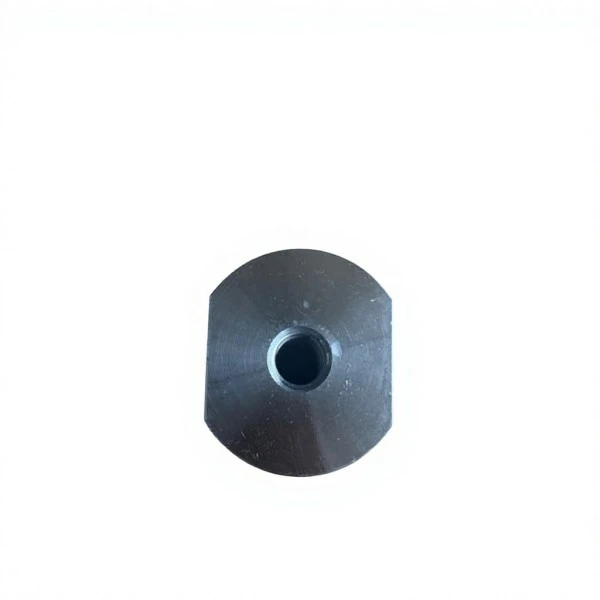
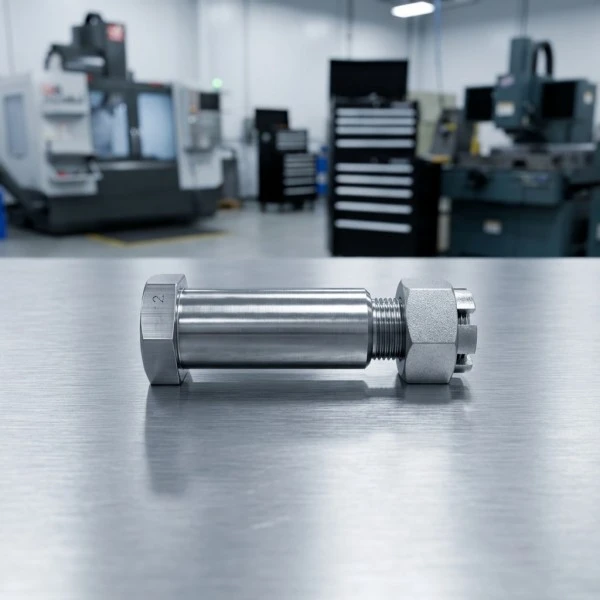
It was 2016, a precision aerospace parts shop out of Detroit, they needed to mill tiny, complex turbine blade roots from a high-strength titanium alloy. Off-the-shelf cutter heads couldn’t hold the tight 0.002mm tolerance they needed for the blade’s fit in the turbine disk, and the stock tooling vibrated so bad at 12,000 RPM that it was wearing out in half the expected run time. My team spent three weeks designing a non-standard carbide cutter head with variable flute spacing, a custom balance groove, and a modified rake angle that let it cut through titanium without chatter. When they fired up their HSM center, they hit 18,000 RPM and ran parts for three shifts straight without a single tool failure, all while staying inside tolerance. That job taught me that non-standard cutter heads aren’t just a “nice-to-have”—they can be a game-changer for HSM, if you get the science right.
Let’s start with what high-speed machining actually demands, because the rules here are non-negotiable. HSM isn’t just “running tools fast”—it’s a process where cutting speeds top 10,000 RPM, and sometimes hit 30,000 or more, depending on the material and tooling. The core challenges here are chatter, thermal expansion, tool balance, and the ability to adapt to unique workpiece geometries. Off-the-shelf cutter heads are made for general purpose work, so they’re built to fit most standard machine tool holders and handle common materials like aluminum or mild steel. But when you’re working with exotic alloys (titanium, Inconel, Hastelloy), complex 3D geometries (like turbine blades, medical implants, or mold dies), or extremely tight tolerances, standard parts fall short. That’s where non-standard cutter heads come in.
But does that mean every custom cutter head works for HSM? Absolutely not. The mistake a lot of new shops make is thinking “non-standard” just means “weird shape”—but HSM requires precision engineering at every step. Balance is non-negotiable here. At 20,000 RPM, even a 0.01 gram of unbalance on a cutter head creates a centrifugal force that can shake a machine, cause tool deflection, and even damage the spindle. Standard cutter heads are balanced to G6.3 or G2.5 tolerance, but for HSM, non-standard heads need to be balanced to G0.4 or better. That’s the kind of custom work we do regularly, because we know that skipping this step leads to tool failure and scrap parts.
Another big factor is tool material and coating. For HSM, you need a tool that can handle high temperatures (the friction at the cutting edge can reach 1,000°C) and resist wear. Off-the-shelf heads use generic coatings like TiN, but non-standard heads can be tailored with specialized coatings like AlTiN or diamond-like carbon (DLC) depending on the material. For example, when a customer needed to machine carbon fiber reinforced polymer (CFRP) for drone components, we designed a non-standard diamond-coated cutter head with ultra-sharp edges that didn’t delaminate the CFRP, something no standard head could do at 25,000 RPM.
Wait, but what about rigidity? In HSM, tool deflection is the enemy. A standard cutter head might have a straight shank, but if you’re machining deep cavities in a mold, a straight shank will flex at high RPM. Non-standard heads can be designed with a tapered shank or a reinforced core that boosts rigidity without adding unnecessary weight. We also work with other custom metal parts to make sure the whole tool assembly holds up—like our precision metalworking components, including custom pin shafts that match the cutter head’s interface. That’s important because even a small mismatch between the cutter head and the spindle holder can cause vibration, even if the head itself is perfect.
Let’s talk about a real-world case that shows how non-standard cutter heads solve HSM problems. A medical device manufacturer came to us needing to mill small, intricate knee implant parts from cobalt-chromium, a material that’s notoriously tough to machine. They were using a standard 4-flute cutter head, but at 15,000 RPM, the tool was producing rough surface finishes (Ra values higher than 0.8μm, which was their requirement of 0.4μm) and breaking every 50 parts. We designed a non-standard 6-flute cutter head with variable helix angles, a precision ground core, and a TiAlN coating. The variable flutes broke up chatter, the core reduced deflection, and the coating withstood the heat from cutting cobalt-chromium. At 17,000 RPM, they ran 200 parts with the same cutter head, and the surface finish was consistent at 0.3μm. That’s the power of a custom cutter head tailored to HSM.
But I know what some readers are thinking: “What about cost? Standard cutter heads are cheap, but non-standard ones must be way more expensive. Is that worth it?” It’s a fair question, and it’s one we talk through with every customer. Let’s do the math: a standard cutter head costs $50, lasts 50 parts, and causes 10 scrap parts per run. A non-standard cutter head costs $500, lasts 500 parts, and has 0 scrap parts. Over time, the non-standard head is cheaper because of less downtime, less scrap, and fewer tool changes. For high-volume HSM jobs, that adds up fast. For low-volume, high-tolerance jobs (like aerospace or medical parts), it’s the only way to get the job done right.
Now, let’s clear up a common misconception: non-standard cutter heads don’t mean you have to give up compatibility with your existing machines. We design our heads to fit all common spindle interfaces (HSK, CAT, BT) by working with custom components from our partners, like the precision metalworking components we offer. We also make sure the head’s dimensions are compatible with your machine’s tool changer and coolant systems—coolant delivery is another big one for HSM. At high RPM, coolant has to reach the cutting edge to flush chips and cool the tool. Non-standard heads can have internal coolant channels tailored to the tool’s geometry, something standard heads can’t do. We also work with parts like shaft sleeve bushings to make sure the tool runs smoothly in the spindle, reducing wear on both the tool and the machine.
Wait, I should mention another industry we work with that relies heavily on non-standard cutter heads for HSM: rock wool production. The centrifuges that make rock wool spin at over 20,000 RPM, and the cutter heads that shape the fiber need to be custom designed to handle that speed. We’ve worked on projects where we collaborated on parts like the rock wool centrifuge assembly main shaft, pairing it with a custom cutter head that can trim the fiber at high speed without vibration. That’s a perfect example of how non-standard tools are essential for processes that use HSM outside of mold and aerospace work.
Of course, none of this is to say that non-standard cutter heads are the answer for every HSM job. If you’re milling aluminum at 10,000 RPM for mass-produced engine parts, a standard cutter head will work fine, and it’s probably more cost-effective. But when your job requires tight tolerances, exotic materials, complex geometries, or high volume at high speed, non-standard is the way to go. The key is partnering with a supplier who understands both HSM science and cutter head design—someone who doesn’t just make parts, but solves problems.
A lot of shops still hold onto the idea that “standard is better” for HSM, but that’s a mindset that’s holding them back. I’ve seen too many customers upgrade their HSM performance by switching to a custom cutter head, whether that’s for a medical implant, a turbine blade, or even a rock wool centrifuge. The technology for non-standard tooling has come a long way in the last decade, with better CAD/CAM software that lets us design complex geometries quickly and advanced machining tools that let us manufacture them with the same precision as standard parts. If you’re struggling with chatter, tool deflection, surface finish, or tool life in your HSM process, a non-standard cutter head might be the solution you didn’t know you needed.
If you’re currently facing challenges with high-speed machining and are considering whether a non-standard cutter head is right for your operation, we’re here to help. Our team has decades of experience designing and manufacturing custom cutting tools for HSM across a wide range of industries, and we work with you every step of the way—from initial design to testing to delivery. We also offer precision metalworking components and custom parts like laser cut stainless steel plates, custom pin shafts for CNC machining, and shaft sleeve bushings to ensure your entire tool assembly works seamlessly. Don’t let outdated ideas about standard tooling hold back your HSM productivity and quality. Reach out to our team to discuss your project and find the right non-standard cutter head solution for your needs.
References
- Shin, Y. C., & Watson, A. R. (2015). High-speed machining: fundamentals and applications. CRC Press.
- Smith, G. T. (2018). Cutting technology: theory and practice. Elsevier.
- American Machine Tool Distributors' Association. (2020). Guidelines for high-speed machining tooling and setup. AMTDA Publications.
- Weck, M., & König, W. (2016). Handbook of machine tools and manufacturing processes. Springer.
- ASM International. (2019). Materials for high-speed machining tools. ASM Handbook, Volume 16: Machining.