


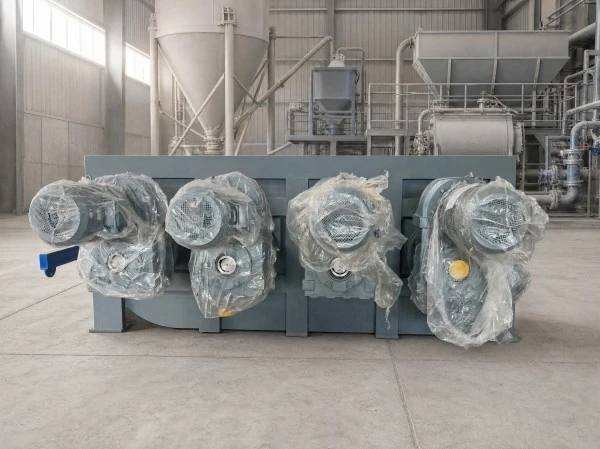
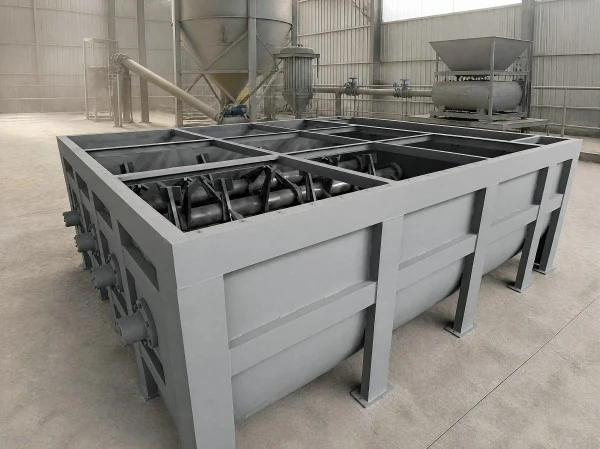

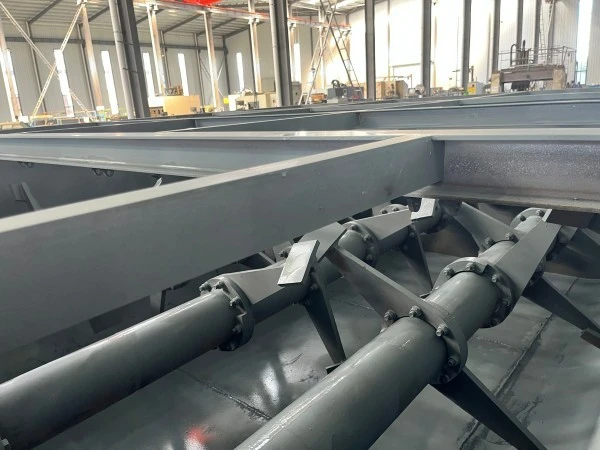
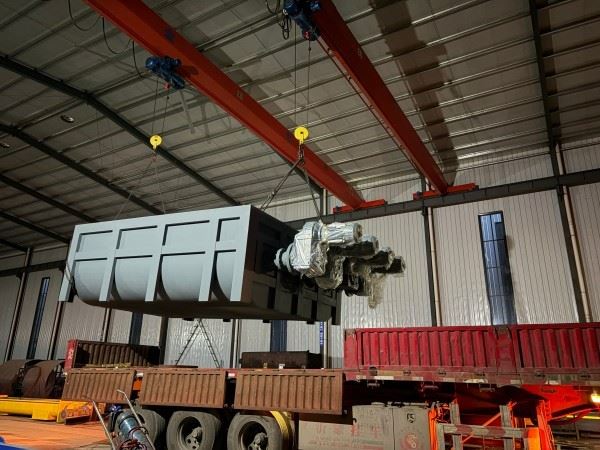
Product Features
• Strong self-priming and conveying: The rotor itself provides pumping capability, eliminating the need for a portion of the conveying pump. • Controllable temperature rise: Jacket cooling at the head combined with a short residence-time design reduces the degradation of heat-sensitive materials. • Contact materials: 304/316L; mirror-polished finishes are available to facilitate cleaning and batch changes. • Mechanical seal: A double-end mechanical seal with cooling is available as an option, making the system suitable for high-solid-content erosive operating conditions. • Continuous or cyclic operation: Two pipeline connection configurations are available to accommodate both small-batch trial production and large-scale manufacturing. • Variable-frequency speed control: The rotational speed is adjustable, facilitating the identification of the process window based on the material's condition.
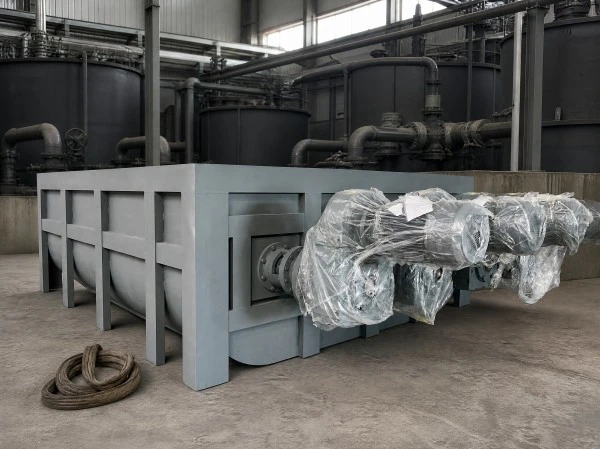
Working principle
1. Feeding and Intake: Paste or premix enters the central region of the rotor through the feed inlet; the high-speed rotation of the rotor generates negative pressure and centrifugal force, which draws the material into the shear zone. 2. Forced Passage through a Narrow Gap: The material is forced through the adjustable gap between the rotor and stator (0.1–1.0 mm); this constitutes the core operation of the entire unit. 3. Multi-stage Shear Action: Within the narrow gap, four simultaneous mechanisms occur: shear (due to the velocity gradient), friction, cavitation (the collapse of bubbles caused by localized negative pressure), and impact (at the edges of the rotor teeth); the superposition of these four effects breaks up agglomerates. 4. Rotor-to-Stator Flow Guidance and Repeated Processing: The stator teeth guide the material back toward the rotor, creating an internal circulation; the material undergoes repeated shearing within the unit before being discharged. 5. Refinement and Homogenization: Powder agglomerates are broken up and droplets are refined, narrowing the particle size distribution of the paste and transforming its appearance from a "granular" texture to a "fine and uniform" one. 6. Temperature Rise Control: Shear work inevitably generates heat; temperature rise is controlled through jacket cooling, shortening the residence time within the unit, and reducing the gap load. 7. Discharge: The processed paste is continuously discharged under the action of centrifugal force and outlet pressure, entering the next process stage.
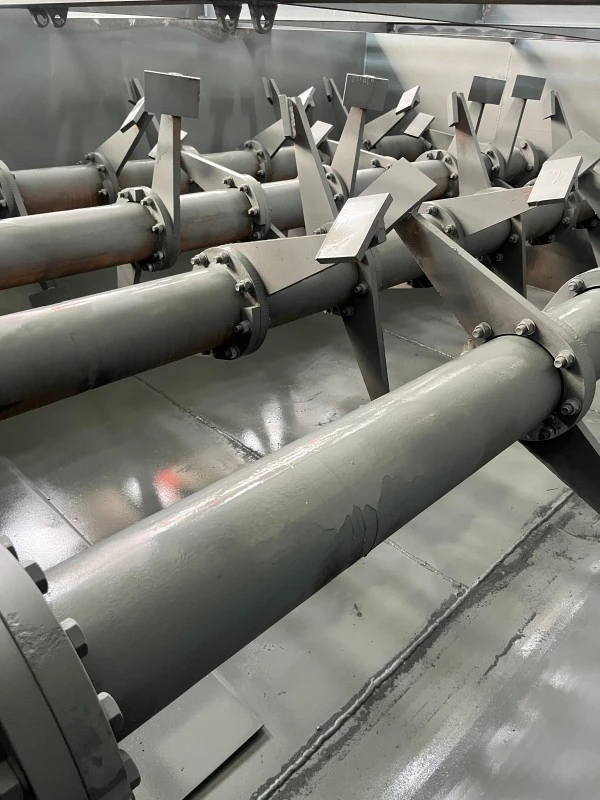
Product Highlights
The paste can also be stirred effectively: stirring is achieved not by propeller blades but through forced shearing in a narrow gap, preventing slippage even at high solid content.
2. Fineness is adjustable without changing the equipment: once the stator–rotor clearance is adjusted, coarse dispersions can be refined into fine dispersions in a single operation.
3. Temperature rise is well controlled: jacket cooling combined with short residence times prevents thermosensitive pastes from carbonizing or forming a skin.
4. Pumping capability is built-in: the rotor provides its own conveying capacity, allowing the piping system to be simplified.
5. Easy batch change and cleaning: the machine head is removable, and the contact surfaces are mirror-polished, making the equipment suitable for multi-product, small-batch production.
Application field
By Industry • Building Materials and Insulation Materials: resin pastes and slurries, bonding agent slurries, and coating pastes
By problem addressed: The paste contains powder lumps, "fish eyes," and a granular texture; the appearance is non-compliant.
By customer and project type • Product manufacturing enterprises: supporting facilities for newly built production lines; capacity upgrades for existing production lines
By Industry
• Chemical Industry: Pigment pastes, sealants, putties, adhesives
FAQ
Q: Can cementitious materials only be made from cement?
A: No. Ordinary Portland cement, slag cement, cementitious powder, fly ash, slag micro-powder, desulfurization gypsum, and their composite systems may be used.
Q: What's your minimum order quantity?
A: MOQ is 1 set, we support single machine order and whole production line solution.
Q: What is your production lead time?
A: Normal delivery time: 15–30 working days after receiving your deposit
Q: Can you design the whole production line for us?
A: Sure. Please send your requirements: raw material, required output, factory area, target finished product. We will draw layout plan and offer full line solution.
Hot Tags: colloidal rotor-stator paste preparation machine, China colloidal rotor-stator paste preparation machine manufacturers, suppliers, factory, Equipment and production line transformation, factory automation system, Non standard winding device, Production Line Modification, Professional winding equipment, Winding Device


