





Product Features
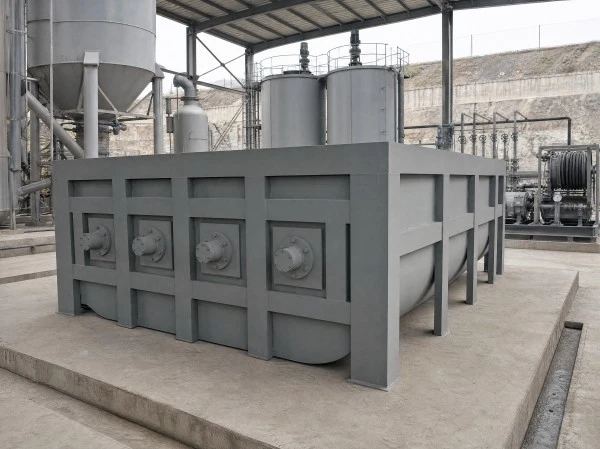
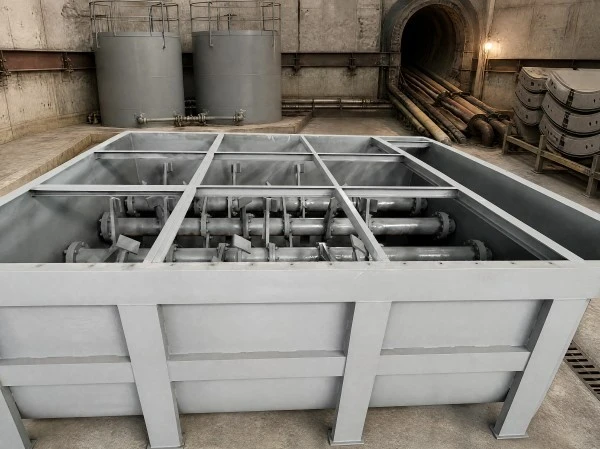
• Two-Stage Mixing Process: The first stage focuses on forced dispersion and wetting, while the second stage employs high-speed shearing for homogenization-ensuring both the prevention of clumping and the avoidance of material segregation.
• Gravimetric Metering: Features independent metering and calibration across four channels: belt scales or loss-in-weight feeders for tailings, loss-in-weight screw feeders for binders, and electromagnetic flowmeters for water.
• Closed-Loop Online Concentration Control: Real-time feedback from microwave or nuclear density meters allows the PLC to automatically adjust feed rates and water addition, keeping concentration fluctuations within a range of ±1.5%.
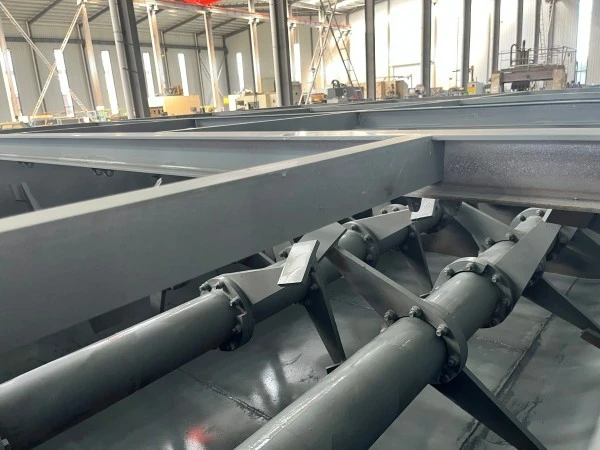
• Wear-Resistant Design: Mixing blades are constructed from high-chromium alloys or feature wear-resistant hardfacing; liners are made of wear-resistant steel or ceramic composites. Wear parts are designed for modular, rapid replacement.
• Fully Enclosed, Low-Dust Operation: Equipped with dust collectors on powder silos, fully enclosed screw conveyors, and dust-control measures at material transfer points to improve the on-site working environment.
• Recipe-Based Management: Tailored recipes for different mining stopes and specific strength requirements (based on curing age) can be recalled instantly via a touchscreen, eliminating the need for manual machine recalibration.
• Minimal Manning: Standard production requires only 1–2 personnel for routine inspections; PLC interlocks and alarm systems replace the need for manual, constant monitoring of gauges and displays.
Working principle
Step 1: Tailings Storage, Dewatering, and Homogenization
Tailings from the processing plant are transported-either via slurry pumps or gravity flow-into vertical storage silos (or thickeners) for dewatering, sedimentation, and homogenization. The silo bottoms are equipped with activation systems (such as activation cones, high-pressure water jets, or air cannons) to prevent the tailings from compacting, arching, or experiencing flow obstructions. Level sensors are installed on the silo walls to provide real-time inventory monitoring.
Step 2: Quantitative Proportioning
Tailings are discharged from the silo bottoms via screw or rotary-disc feeders and continuously measured using belt scales (or loss-in-weight feeders). Cementitious materials are metered and conveyed from their respective silos by screw feeders. Clean water is added in controlled quantities, regulated by electromagnetic flowmeters and control valves, while chemical admixtures are dosed proportionally via metering pumps. All four material streams are managed through a dual-loop control system based on "preset mix ratios + real-time feedback."
Step 3: Primary Mixing (Dispersion and Wetting)
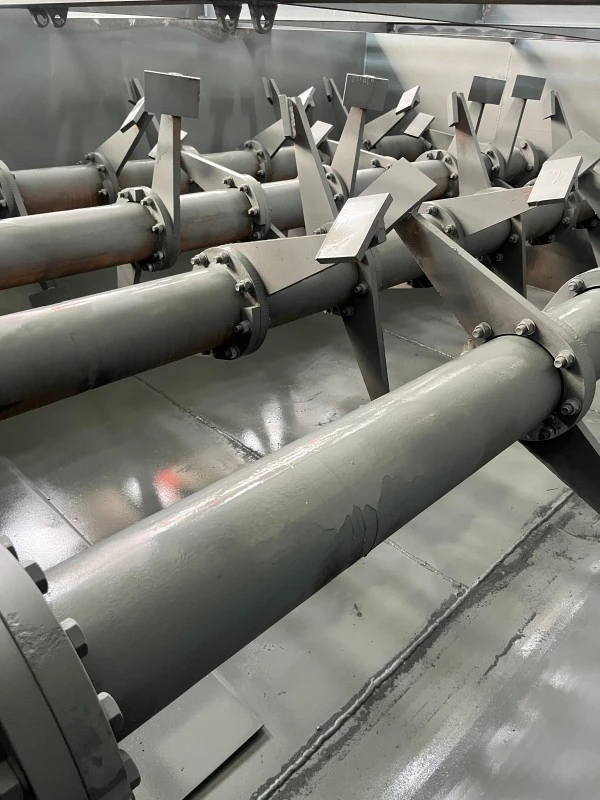
The four material streams enter a twin-shaft forced-action mixer. The counter-rotating blades vigorously disperse, agitate, and wet the dry materials and cement, eliminating "dry clumps" or "cement balls" to produce an initially uniform, thick slurry. This stage is critical for ensuring subsequent homogenization and minimizing variability in the final material strength.
Step 4: Secondary Homogenization (Shearing and Consistency Stabilization)
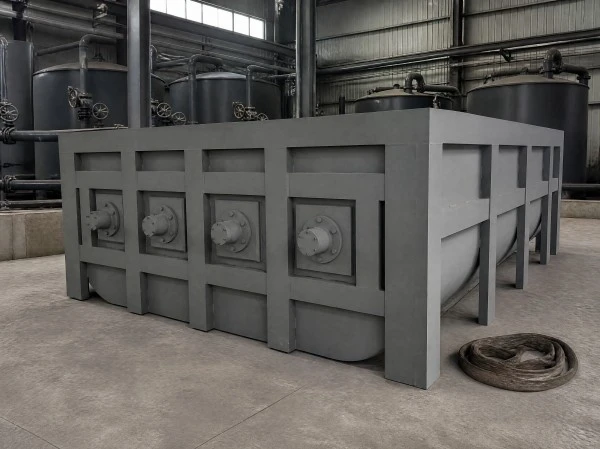
The pre-mixed slurry enters a high-speed mixing tank (paste homogenization tank). Under high-shear forces, any remaining agglomerates are broken down, micro-bubbles are removed, and the slurry's concentration and rheological properties are stabilized. This ensures the paste reaches a state that is resistant to segregation and bleeding, while remaining pumpable. This two-stage mixing process is a core feature of the system, as a single-stage process cannot effectively achieve both thorough dispersion and uniform homogenization.
Step 5: In-line Monitoring and Closed-Loop Control
In-line concentration sensors (microwave or nuclear-based), electromagnetic flowmeters, and pressure transmitters are installed at the outlet of the homogenization tank and the inlet of the pumping system. Based on the deviation between the measured concentration and the target concentration, the PLC automatically fine-tunes the tailings feed rate or water addition, achieving a closed-loop control of the concentration. Simultaneously, it records the proportioning data for each batch, generating traceable shift reports.
Step 6: Pumping and Pipeline Transport
The qualified paste is fed into a backfill pump (typically a hydraulic piston pump), pressurized, and then transported via surface pipelines, borehole drop pipes, and underground piping networks to the mined-out areas (stopes). The system is equipped with high/low-pressure switching and overpressure protection; as conditions approach the critical threshold for pipeline blockage, the system can automatically reduce flow, adjust pressure, or initiate a flushing sequence.
Step 7: Shutdown, Flushing, and Switching
At the end of each shift or prior to an extended pump shutdown, the mixing tank, pump chamber, and pipelines are flushed with clean water to prevent the paste from solidifying and causing blockages. When switching between different stopes or changing the mix design, the pipelines must be cleared first to prevent the intermixing of slurries with different compositions within the pipes.
Product Highlights
Two-Stage Mixing: Initial Disintegration Followed by Homogenization
In many projects, pipeline clogging is not caused by pump failure, but by the presence of cement clumps in the slurry. We address this through a two-stage process: the first stage focuses on forced disintegration and wetting, while the second stage employs high-speed shearing for homogenization, ensuring the discharged material is a uniform paste.
One-Touch Recipe Switching
Different mining stopes and varying strength requirements (based on curing age) necessitate specific mix ratios. Operators can simply select the required recipe via a touchscreen; the switch is completed in under 30 seconds, eliminating the need for manual machine recalibration or reliance on the subjective experience of veteran operators.
Fully Traceable Batching Data
Data for every shift and every batch-including the quantities of tailings, cementitious materials, and water, as well as the measured concentration-is automatically recorded and exportable to Excel. This allows for retrospective analysis in the event of disputes regarding material strength and facilitates cost accounting for the mining operation.
Modular, Rapid-Replacement Wear Parts
Mixing blades and liner plates are designed as modular components. Individual parts can be replaced in approximately 30 minutes without requiring the entire machine to be dismantled, thereby minimizing downtime and associated losses.
Application field
Non-metallic mines: backfilling of mined-out areas and ground pressure control in phosphate ore, gypsum ore, salt ore, and fluorite ore mines
Capacity expansion and retrofitting: upgrading and replacing the existing filling station due to insufficient production capacity, unstable concentration, and poor precision in manual batching
Mineral mine self-built project: The owner procures and operates the project independently.
Cementation and backfilling of shield slurry and construction waste for tunnel and underground engineering
FAQ
Q: Can cementitious materials only be made from cement?
A: No. Ordinary Portland cement, slag cement, cementitious powder, fly ash, slag micro-powder, desulfurization gypsum, and their composite systems may be used.
Q: How long will the delivery cycle take? How long will on-site installation take?
A: For standard models, delivery takes approximately 60–90 days from the effective date of the contract, depending on the configuration and whether the equipment includes a storage silo and pumping capability. On-site installation typically takes 20–40 days.
Q: What is your production lead time?
A: Normal delivery time: 15–30 working days after receiving your deposit
Q: Can you design the whole production line for us?
A: Sure. Please send your requirements: raw material, required output, factory area, target finished product. We will draw layout plan and offer full line solution.
Hot Tags: mine tailings paste backfill preparation station, China mine tailings paste backfill preparation station manufacturers, suppliers, factory, factory automation system, Gypsum calciner, Gypsum powder calcination, Non standard winding device, Professional winding equipment, Winding Device


