

If you’ve ever walked through a manufacturing facility, a construction site, or even a farm expansion zone, you’ve probably seen a truss manipulator at work—those strong, boom-equipped machines that lift, position, and maneuver heavy, awkward loads with way more precision than any human could pull off solo. As a supplier of these workhorse machines, I talk to customers every single week asking the same thing: “What accessories do I actually need to pair with my truss manipulator to get the job done right?” Let’s break this down in plain, real-talk terms, no overly technical jargon, just the accessories that make these machines actually versatile enough for all the tasks you throw at them.
First off, let’s get one thing straight: truss manipulators aren’t one-size-fits-all. The base unit handles the big moves, but the accessories turn it into a tool that can unload farm materials, position rock wool for insulation, or even work with industrial furnaces. Over the years, I’ve seen folks waste money on random add-ons that don’t fit their needs, so I’m gonna cut through the fluff and cover the common, actually useful accessories you’ll likely run into.
Starting with the most versatile and often overlooked accessory: modular end effectors. Wait, “end effectors” sounds fancy, but they’re basically the grippers, hooks, and clamps that attach to the end of the truss boom to grab whatever you’re moving. Unlike fixed grippers that only work for one load, modular ones let you swap out attachments in minutes—we’re talking quick-change designs, no tools needed half the time. For example, if you’re moving bulky construction panels, you can grab a flat-panel clamp. If you’re lifting loose, irregularly shaped farm materials like soil or rock chunks, a heavy-duty spreader hook works better. I always recommend modular end effectors because they turn a single truss manipulator into a multi-tasker; you don’t need to buy a whole separate machine for every small job.
Next up, rotating turntables. These are accessories that mount between the truss boom and the end effector, letting you spin a load 360 degrees without having to reposition the entire manipulator. That’s a game-changer for precision work. Let’s say you’re working with industrial components or even materials for agriculture—like when you need to align a long, uneven load perfectly in a tight spot. A rotating turntable eliminates the hassle of readjusting the whole machine just to twist a load into place. I’ve had customers in the agriculture space tell me this accessory cut their setup time for soil processing by almost 40% because they didn’t have to reposition the truss every time they needed to rotate a pile of material.
Then there’s load monitoring and safety accessories, which I always say are non-negotiable, no matter what industry you’re in. Truss manipulators lift heavy stuff, so you can’t skip on these. Load cells mounted on the boom give real-time weight readings, so you don’t overload the machine and risk breaking parts or causing an accident. There are also proximity sensors that alert you if you’re getting too close to walls, equipment, or people, which is super important in crowded work sites. I’ve seen too many small businesses skip these to save a few bucks, and they end up paying for repairs or downtime when a load shifts unexpectedly. Don’t skimp on safety accessories—they’re worth every penny.

Now, let’s get into industry-specific accessories, because this is where things get tailored. If you’re in agriculture or materials processing, there’s a whole suite of accessories that work seamlessly with truss manipulators. For example, if you’re handling soil, crop residues, or organic materials, the Agricultural Soil Turning Crusher is a perfect pairing with a truss manipulator. This attachment mounts to the truss end, turning the manipulator into a mobile soil crusher and turner, which is great for composting, prepping planting beds, or processing organic waste on large farm operations. It’s way more efficient than moving material to a fixed crusher, because you can take the crusher right to the pile instead of hauling loose soil around.
Another big one for industrial materials processing is the Main Shaft Of The Earth-turning Crusher. Wait, why is that an accessory for a truss manipulator? Because if you’re working with heavy-duty earth-turning crushers that need to be moved between work sites or repositioned on a plant floor, a truss manipulator paired with the main shaft replacement parts and mounting brackets lets you move that entire crusher unit safely and precisely. I’ve had a few mineral processing customers who need to move their earth-turning crushers between processing bays, and this accessory lets them do it without hiring a separate crane, which saved them thousands in rental costs last year.
For folks working in furnace or insulation manufacturing, truss manipulators pair with accessories like the Rotary Distributor For Cupola Furnace. Cupola furnaces are used to melt metal for casting, and they require consistent, even feeding of materials to work efficiently. A truss manipulator with a rotary distributor attachment can lift and distribute raw materials like iron ore, coke, and limestone evenly into the furnace, which improves melting efficiency and reduces waste. That’s a huge win for metal foundries that are looking to cut costs and boost productivity.
If you’re making rock wool insulation, which is a super common material in construction for insulation and fire resistance, truss manipulators work hand-in-hand with the Rock wool board polishing machine. Rock wool boards are made from molten rock spun into fibers, formed into boards, and then polished to get a smooth, even surface for installation. A truss manipulator can lift and position the raw rock wool boards into the polishing machine, then move the finished boards to storage or shipping—this cuts down on manual handling and reduces the risk of damaging the delicate boards during processing. Many insulation manufacturers use this exact setup to speed up their production lines.
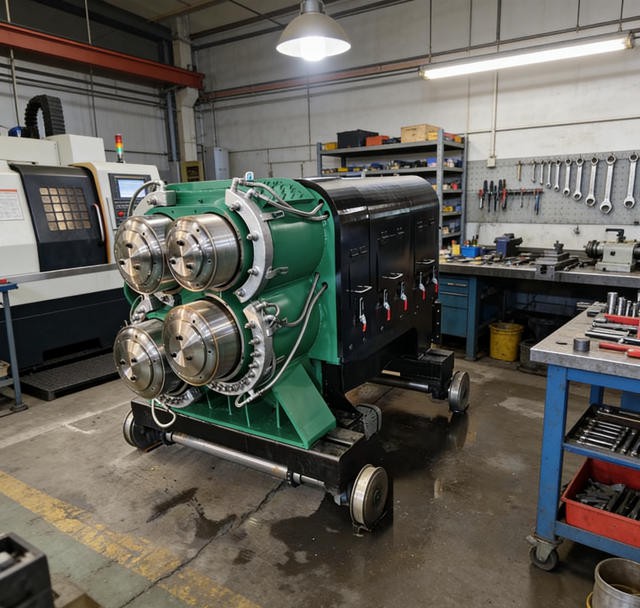
Another accessory that’s great for fiber-based materials is the Four-roll Fiber-forming High-capacity Centrifuge. Truss manipulators are used in the material handling stage of this centrifuge process, lifting raw fiber materials into the centrifuge feed hoppers, and then moving the finished fiber product to processing lines. This accessory is a must for large-scale fiber production, because the centrifuge units are heavy and need to be positioned precisely to avoid spillage or production delays. I work with a few fiber processing companies that told me pairing their truss manipulator with this accessory boosted their line’s output by 25% because they could keep materials moving without slowdowns from manual lifting.
Wait, let’s not forget transport accessories, like crane adapters and lifting slings. These are basic but super important. Crane adapters let you mount the truss manipulator to a site crane if you need to move really tall or heavy loads that the truss can’t reach on its own. Heavy-duty lifting slings and adjustable spreader bars are also key for uneven loads, like long metal beams or large bulk containers. I always tell customers to get slings rated for the maximum weight their truss can lift, because a cheap sling can snap and cause a huge mess.
Portability accessories are another big one for small businesses or folks who work at multiple sites. Things like foldable boom extensions, heavy-duty casters for the base unit, and power adapters for both indoor and outdoor use. If you’re working at a construction site that moves every few weeks, foldable extensions let you pack the truss manipulator into a smaller space for transport, which saves on trucking costs. Casters make it easy to move the unit around a factory floor without needing a forklift.
Now, a quick pro tip from someone who’s been in this space for years: don’t buy accessories that don’t match your truss manipulator’s weight rating and boom length. I’ve had customers come to me with an undersized truss that tried to pair with a huge soil turning crusher, and it just couldn’t handle the load. That leads to broken parts, downtime, and unsafe working conditions. Always check your truss’s specifications first, and if you’re not sure which accessories work, just ask a supplier—we’d rather help you get the right setup than sell you something that doesn’t work.
At the end of the day, the best accessories for your truss manipulator are the ones that solve your specific pain points. If you’re moving farm materials, go for the modular end effectors and agricultural soil attachments. If you’re in insulation or metal processing, the furnace and fiber-related accessories will make your line run smoother. Safety accessories are non-negotiable across the board, no matter what industry you’re in.
If you’re in the market for truss manipulators or any of these accessories, or if you need help figuring out exactly what you need for your operation, reach out to our team. We’ve worked with all kinds of businesses, from small farms to large manufacturing plants, so we can help you find the setup that fits your needs and your budget. No sales pitch pressure, just straight talk about what works.
References:
- Industrial Machinery Association. (2023). Accessory Compatibility Guidelines for Truss Manipulators.
- Agricultural Equipment Manufacturers Association. (2022). Multi-Purpose Material Handling Solutions for Farm Processing.
- Rock Wool Insulation Production Handbook. (2023). Material Handling and Processing Best Practices.
- Foundry Safety and Maintenance Journal. (2022). Load Monitoring and Accessory Safety for Furnace Material Handling.
- International Fiber Processing Association. (2023). High-Capacity Fiber Handling Equipment Pairing Guide.