

When we’re chatting with clients who come to us for shaft sleeve bushings—especially folks who might be new to spec’ing these parts—one question that comes up all the time is: “How do I pick the right clearance?” It makes total sense, right? Too tight, and your bushing’s gonna rub, overheat, and wear out way faster than it should. Too loose, and you get that annoying slop, vibration, or even shaft wobble that kills performance. As a supplier who’s been deep in metal parts fabrication for years (check out our Shaft Sleeve Bushing page for real-world examples), I’ve seen mistakes here lead to way more headaches than they need to. Let’s break this down like we’re grabbing coffee and troubleshooting a project, no stuffy engineering jargon that makes your eyes glaze over.
First off, let’s get one thing straight: clearance isn’t a one-size-fits-all number. It’s a range that depends on three big factors: what your bushing is made of, how much heat your system’s running, and how the whole assembly is moving. I’ve had clients come in asking for “0.002” clearance like that’s a magic number, but if their application’s a high-temp industrial conveyor vs. a precision 3D printer part? Those numbers are totally different. Let’s start with material, because that’s the foundation.
Most of the shaft sleeve bushings we make (from bronze alloys to polymer blends, even some graphite-impregnated types) have different expansion rates. Bronze, for example, expands about 10.8 x 10^-6 per °C, while steel is around 6.5 x 10^-6. Wait, that means if you have a steel shaft and a bronze bushing, when temperatures spike, the bushing’s gonna expand more than the shaft—so you need more initial clearance to account for that. If you went with a polymer bushing, expansion rates can be 50-100x higher than metal, so you need way more room to let it breathe. I learned this the hard way early on: we made a custom bushing for a client’s small pump with too-tight clearance, and when they ran it for a day at full tilt, the bushing seized solid. They were mad, but once we explained the expansion math, they got it, and we fixed the clearance for them. That’s why we always ask material questions upfront now—no skipping that step.
Next up, load and speed. If your shaft’s moving fast, like a motor spindle spinning at 10,000 RPM, the parts are generating friction heat fast. More clearance means more space for that heat to dissipate without the bushing melting into the shaft. If it’s a slow, heavy load—like a rotary table gear (check out our Rotary Table Gear pages to see how these pair with bushings)—you don’t want too much clearance because that heavy load will cause more wobble, which could damage the gear teeth over time. We had a client making a custom rotary table for a manufacturing line who initially asked for super loose clearance, but once we showed them the load specs, we dialed it back a bit—they’ve run 24/7 for two years now with zero issues. Speed and load are a balancing act, not just one or the other.
Then there’s environment and lubrication. Is your assembly running in dust, dirt, or liquid? If it’s a dusty factory setting, a little extra clearance helps any debris that sneaks in get pushed out, instead of grinding between the shaft and bushing and wearing both down. But if it’s a sealed system, like a pump with a shaft gasket sleeve (our Shaft Gasket Sleeve line works perfectly here to keep leaks out), you don’t need as much clearance because you’re controlling contaminants anyway. Lubrication matters too: if you’re using oil or grease, a bit less clearance works because the lubricant forms a protective film. Dry-running bushings (like graphite ones) need a touch more space to hold that solid lubricant in place and prevent dry friction.
Wait, let’s talk about the types of clearance people usually deal with—fit classes. I know, fit classes can sound like alphabet soup (RC, LT, FN…), but let’s keep it simple. RC (Running Clearance) is for moving parts, which is exactly what shaft sleeve bushings are for. For low-speed, heavy-load applications, RC2 clearance works well—tight enough to prevent slop, with just enough room for lubrication. For high-speed or high-temp, RC3 to RC4 is better, because more space lets heat escape and stops expansion from causing seizure. If someone’s dealing with super high temps (like 500°F+), we usually recommend bumping it to RC5, because metal expansion is way more noticeable there. I always tell clients: if you’re not sure which RC class fits, send us your specs (shaft material, bushing material, speed, temp, load) and we can run the numbers. We don’t just sell parts—we help get them right.
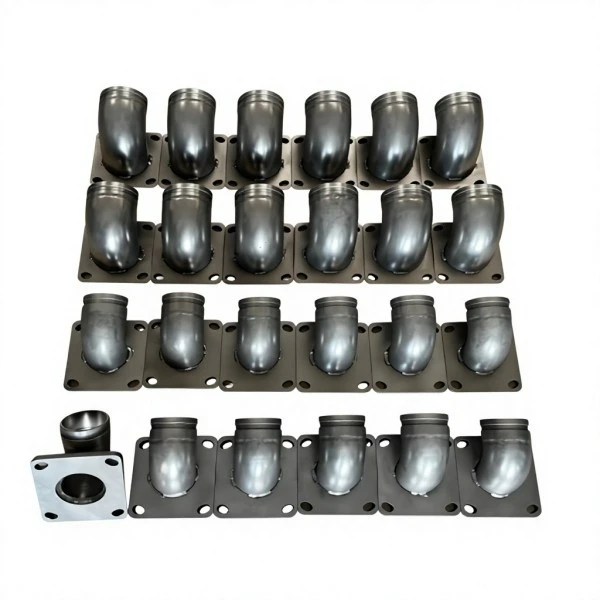
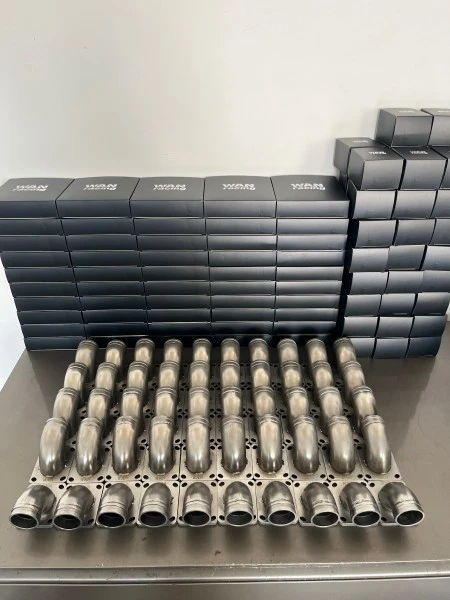
Another thing people sleep on is manufacturing tolerances for both the shaft and the bushing. Even if you pick the perfect clearance number, if your shaft is machined 0.001” off and your bushing bore is 0.001” off, that changes everything. At our shop, we do double checks on every part we make—for example, when we make our Adaptive Type Ram Air Intake and Thickened And Reinforced Air Intake Nozzle parts, we hold tight tolerances because they’re paired with moving assemblies where clearance matters. We tell our bushing clients the same: make sure your shaft is within its tolerance spec, and let us know that tolerance when you order. A lot of people assume the shaft is perfect, but it’s always good to confirm.
Let’s go through a quick real example to make this concrete. Say a client needs a bushing for a small electric motor shaft: steel shaft, bronze bushing, runs at 3,000 RPM, max temp of 150°F, oil-lubricated, low load. We’d recommend RC2 clearance. If that same motor was running at 10,000 RPM and hit 250°F, we’d bump to RC3, because the higher speed means more heat and higher expansion. If we switched to a polymer bushing for a food-grade application (no oil allowed), we’d go to RC4 because the polymer expands more and needs more space, plus dry lubrication works better with a little extra room.
Mistakes I’ve seen way too often: clients copying clearance numbers from a similar part but not accounting for the small differences. Like, a client had a bushing for a conveyor that worked great at RC2, so they ordered the same for a smaller conveyor that ran twice as fast. It seized up in a week. They fixed it by moving to RC3, and it’s been fine. Another common mistake is not accounting for thermal expansion when the assembly is running vs. room temp. I once had a client who measured clearance at 70°F, forgot that their system runs at 400°F—expansion made it zero clearance, seized the whole motor. Now we always ask for max operating temp, not just room temp, and factor that in before we quote.
So what should you do next if you’re trying to pick clearance for your shaft sleeve bushing? First, gather all your specs: shaft material and diameter, bushing material, operating speed, max temp, load type (radial, axial?), lubrication method, and environment (dust, liquid, food-grade?). Then, don’t just guess—reach out to your supplier (that’s us, by the way). We’ve done hundreds of these calculations, and we can tailor the clearance to your exact setup, not some generic number. At the end of the day, the right clearance means your bushing lasts longer, your machine runs smoother, and you don’t have to deal with unplanned downtime.
A lot of folks think clearance is just a tiny detail, but it’s one of the most important ones. Mess it up, and even the highest quality shaft sleeve bushing is gonna fail early. We’ve seen clients skip the spec check and end up wasting money on parts that don’t work, so our whole team makes it a point to walk through each application step by step. If you’re working on a project right now and need help with clearance, or you just want to check out our range of parts like the Shaft Sleeve Bushing line, the Adaptive Type Ram Air Intake, or the Thickened And Reinforced Air Intake Nozzle, just get in touch—we’re here to help you get the right parts the first time.
References
Shigley, J. E., & Mischke, C. R. (2001). Standard Handbook of Machine Design (3rd ed.). McGraw-Hill.
Jones, F. D., & Hooke, C. J. (2019). Bearing Design and Application (2nd ed.). CRC Press.
American Gear Manufacturers Association. (2020). AGMA 915-A02: Clearances for Sleeve Bearings.
Nelson, S. A. (2018). Thermal Expansion of Common Engineering Metals. Modern Machine Shop.